Understanding the Anion Gap?
The anion gap is a derived number that assists in evaluating the equilibrium of charged particles in the blood. It is calculated from standard electrolytes measured in a blood test, especially sodium, chloride, and bicarbonate. Because the body maintains acid-base balance through carefully controlled chemistry, the anion gap can serve as a practical diagnostic clue when something is off in the body’s serum electrolytes.
At a basic level, the anion gap represents the https://privatebin.net/?bd75b3ed35b5af73#4bpZw2eWMZKp2SkBqaNCShinW7GqxZu943cjG9R7x98M discrepancy between the main measured positively charged and anionic ions in the blood. Since not all ions are directly measured in routine blood chemistry, the gap helps estimate the presence of unmeasured anions. That is why it is often used in lab result interpretation and overall lab test interpretation when evaluating a metabolic disorder or electrolyte imbalance.
Doctors often look at the anion gap as part of a blood chemistry panel or electrolyte panel. It is not a diagnosis by itself, but it can indicate conditions affecting acid-base status and overall clinical significance.
How the Anion Gap Calculator Operates
An anion gap calculator takes specific lab values from a blood test and follows a simple formula to produce a result. The calculator is designed to help you calculate anion gap rapidly and consistently using the values reported in a standard lab report.
Most calculators ask for three main inputs: serum sodium, serum chloride, and serum bicarbonate. These are usually listed on an electrolyte panel or broader blood chemistry report. Once entered, the calculator subtracts chloride and bicarbonate from sodium to determine the gap.
The output can help show whether the result fits a normal anion gap, a high anion gap, or a low anion gap. That classification matters because it guides the next step in results analysis. A high value often suggests excess acids or unmeasured anions, while a low value can point to protein abnormalities, especially changes in albumin.
In practical use, the calculator is only one part of medical interpretation. The result must be considered alongside symptoms, the full blood chemistry panel, and other tests that help identify the underlying cause.
Explaining the Anion Gap Formula
The standard anion gap formula is:
Na - (Cl + HCO3)
In this calculation, Na represents sodium, Cl represents chloride, and HCO3 represents bicarbonate. This is the core of the anion gap calculation, and it is the basis of every reliable anion gap calculator.
To follow the calculation steps, imagine a lab report with these values:
- Na = 140 Cl = 102 HCO3 = 24
First, add chloride and bicarbonate: 102 + 24 = 126. After that subtract that sum from sodium: 140 - 126 = 14. Here, the anion gap is 14.
This straightforward computation reflects the relationship between measured ions and the body’s hidden electrical balance. Since not every ion shows up on routine lab tests, the result gives insight into serum electrolytes and can help identify an underlying metabolic acidosis or other acid-base disturbance.
Although the formula is straightforward, the interpretation is where the real value lies. A number on its own is not as meaningful than the pattern it creates with other clinical data.
Typical Anion Gap Range and Lab Reference Values
The normal range for anion gap can change by laboratory because different methods and instruments may produce slightly different results. This is why it is important to check the lab’s reference range or reference range rather than relying on a single universal cutoff.
In many settings, a usual value falls within a narrow range that reflects expected test values for sodium, chloride, and bicarbonate. However, the exact numbers depend on the laboratory’s testing method, the patient’s albumin level, and whether the result has been adjusted using albumin correction.
Serum albumin is a major negatively charged protein in blood, and it impacts the anion gap significantly. If albumin is low, the anion gap may appear lower than expected even when the underlying acid-base picture is more complicated. As a result, clinicians often consider a adjusted anion gap when albumin is abnormal.
Because lab-specific cutoffs vary, the best way to judge a value is to compare it with the laboratory’s stated normal range and interpret it in the full context of the patient’s blood chemistry and symptoms. A “normal” result does not always rule out disease, and an “abnormal” result does not always mean a serious problem.
Why High Anion Gap Means
A high anion gap usually suggests that extra acids or unmeasured anions are found in the blood. One major clinical associations is metabolic acidosis, a condition in which the body has an acid overload or is unable to clear acid well.
Common causes include lactic acidosis, ketoacidosis, and renal failure. In lactic acidosis, lactic acid rises when tissues lack adequate oxygen or when metabolism is changed. In ketoacidosis, acid-producing ketones increase, often in settings such as uncontrolled diabetes, prolonged fasting, or heavy alcohol use. In renal failure, the kidneys cannot clear acids efficiently, leading to a higher gap.
A high result is not diagnostic alone. It is a diagnostic clue that should prompt further investigation into the patient’s acid-base status, symptoms, medications, and recent illness. The broader pattern on the blood chemistry panel often offers the main clue to understanding the cause.
Other findings may make the finding more convincing. For example, low bicarbonate on the electrolyte panel supports a metabolic acid problem. If the anion gap is high and the patient has signs of dehydration, infection, poor tissue oxygenation, or uncontrolled diabetes, the result becomes more clinically important. Careful results analysis is important before drawing conclusions.
Explaining Low Anion Gap Means
A low anion gap is not as common than a high one, but it can still be medically important. The most common reason is hypoalbuminemia, meaning the blood has too little albumin. Since albumin is a major unmeasured anion, a decreased level can decrease the calculated gap.
In some cases, a low result points to a lab error. That is why repeating the test or reviewing the sample handling process is often important before assuming a disease process. Small measurement issues with sodium, chloride, or bicarbonate can change the final number.
A persistently low anion gap may also be seen in conditions such as multiple myeloma, where abnormal proteins affect the electrical balance in blood. In such cases, the low result may be a clue to an underlying protein disorder rather than a simple electrolyte issue.
Low values should be interpreted carefully because they can be misleading if albumin is not considered. This is where albumin correction becomes useful. Adjusting for albumin can uncover a hidden abnormality or show that the measured value is lower mainly because of protein loss. Either way, the low result deserves context.
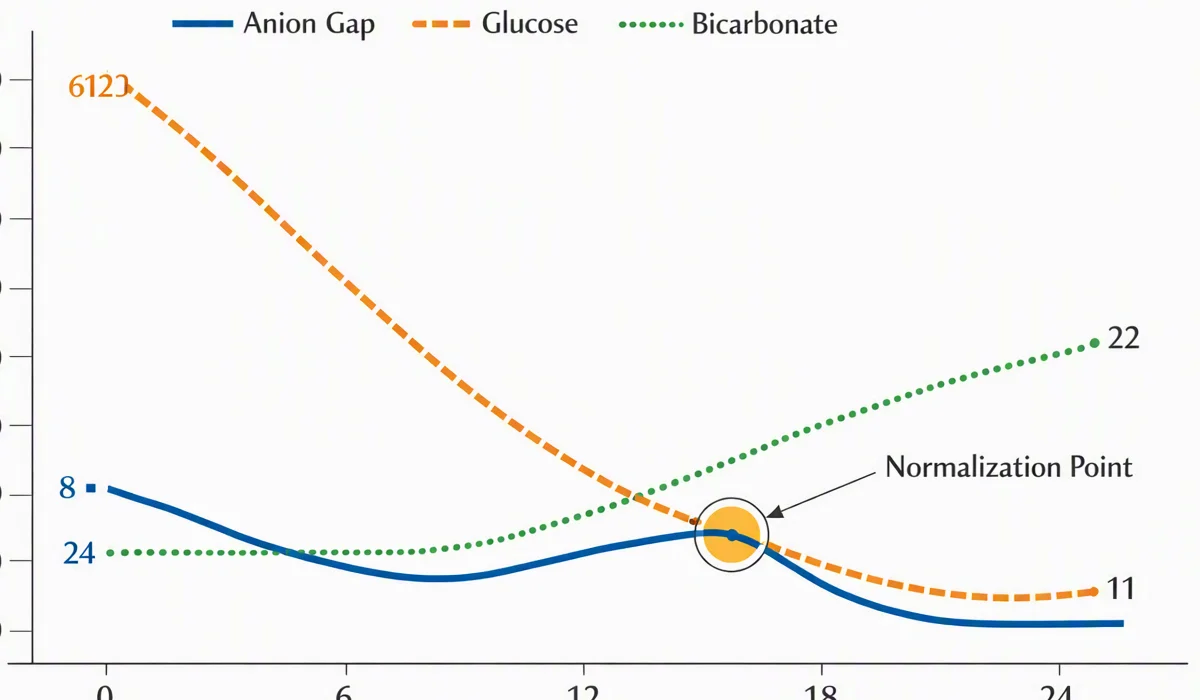
Ways to Read Results Together with Other Lab Tests
The anion gap is rarely interpreted by itself. A full evaluation often includes an arterial blood gas, the entire electrolyte panel, and additional markers of renal and metabolic function. Together, these tests help determine the patient’s acid-base balance and overall medical interpretation.
An arterial blood gas offers insight into pH, carbon dioxide, and oxygenation. When combined with the anion gap, it helps clarify whether there is metabolic acidosis, respiratory compensation, or a mixed disorder. This enhances the lab test interpretation and increases diagnostic accuracy.
Albumin correction is particularly important when the albumin level is abnormal. A corrected result may more accurately reflect the true anion gap formula result by considering the effect of low protein on the calculation. This is valuable in patients with chronic illness, malnutrition, inflammation, or liver-related protein changes.
Potassium can also be helpful, even though it is not always included in the basic formula. It adds to the overall electrolyte picture and may reveal a broader electrolyte imbalance. In addition, kidney markers and measures of renal function are essential when a high gap raises concern for impaired acid clearance or advanced disease.
In the end, the best interpretation comes from combining the number with symptoms, medication history, and all available blood chemistry data. That is the difference between a raw calculation and a clinically useful result.
Typical Queries About Anion Gap Calculation
The FAQ shown below addresses typical concerns about anion gap calculation, the calculator process, and how to use the result in practical medical interpretation.
What’s the formula for calculating anion gap?
The standard formula is Na - (Cl + HCO3). It takes serum sodium, serum chloride, and serum bicarbonate from a blood test to determine the gap. This is the usual anion gap formula used in clinical practice and in an anion gap calculator.
What can a high anion gap indicate?
A high anion gap often indicates metabolic acidosis caused by extra acids or unmeasured anions. Common causes include lactic acidosis, ketoacidosis, and renal failure. The result is a clue that further testing may be needed.
Can albumin change the anion gap result?
Yes. Albumin has a major effect on the result because it is one of the main unmeasured anions in blood. A low albumin level can make the measured gap appear lower, which is why albumin correction and a corrected anion gap are often used in interpretation.
What is considered a normal anion gap?
The normal anion gap depends on the lab’s reference range or reference interval. There is no single universal cutoff because lab values vary by method and instrument. The best approach is to compare the result with the laboratory’s reported range and the rest of the blood chemistry panel.
Why might an anion gap be low?
A low anion gap may occur because of hypoalbuminemia, lab error, or conditions such as multiple myeloma. Since low values can reflect measurement issues or protein changes, repeat testing and review of the full electrolyte panel are often useful before making conclusions.
Used correctly, an anion gap calculator can simplify the work of spotting acid-base disorders and support more accurate lab result interpretation. That figure is only the starting point; the real advantage comes from knowing the calculation, reviewing the reference range, and assessing the result with the full clinical picture.